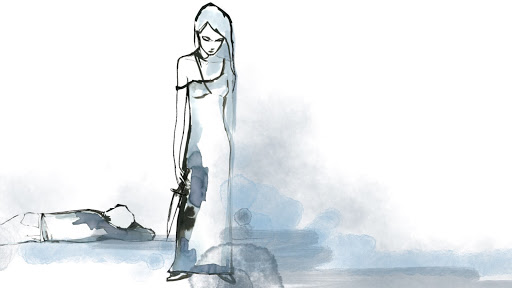
Change Written in Blood: 15 Years of Fighting Family Violence in Latvia

On our 15th anniversary, Re:Baltica revisits the issues it has long cared about. Then and now.
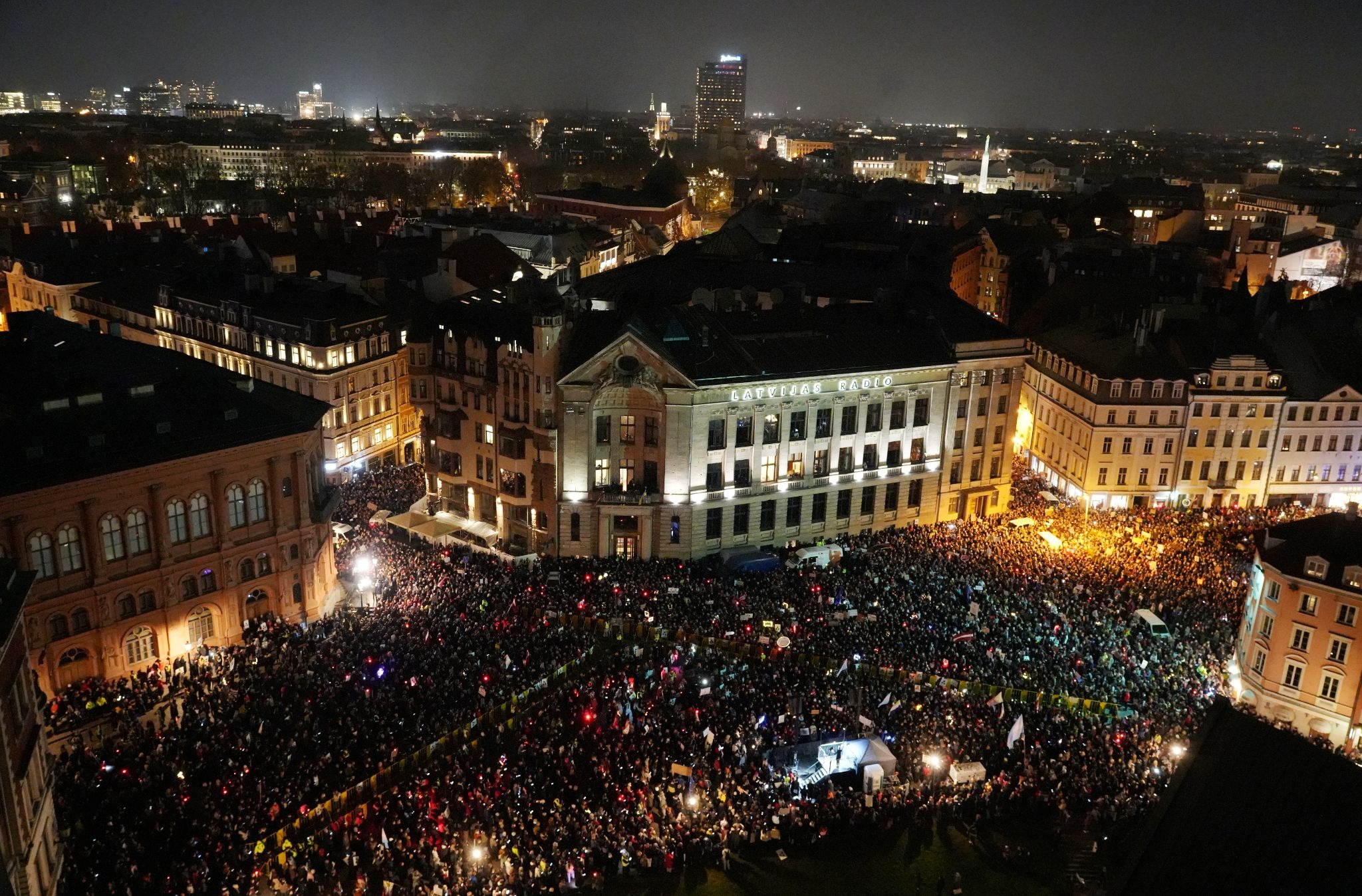
From the dismissive view that “it’s a family matter” to more than 10,000 people gathering in Dome Square to declare that “violence against women is not our value.” Efforts to combat domestic violence in Latvia have at times been pushed by Europe and at others by grassroots activism. Yet some of the country’s laws have been written in blood.
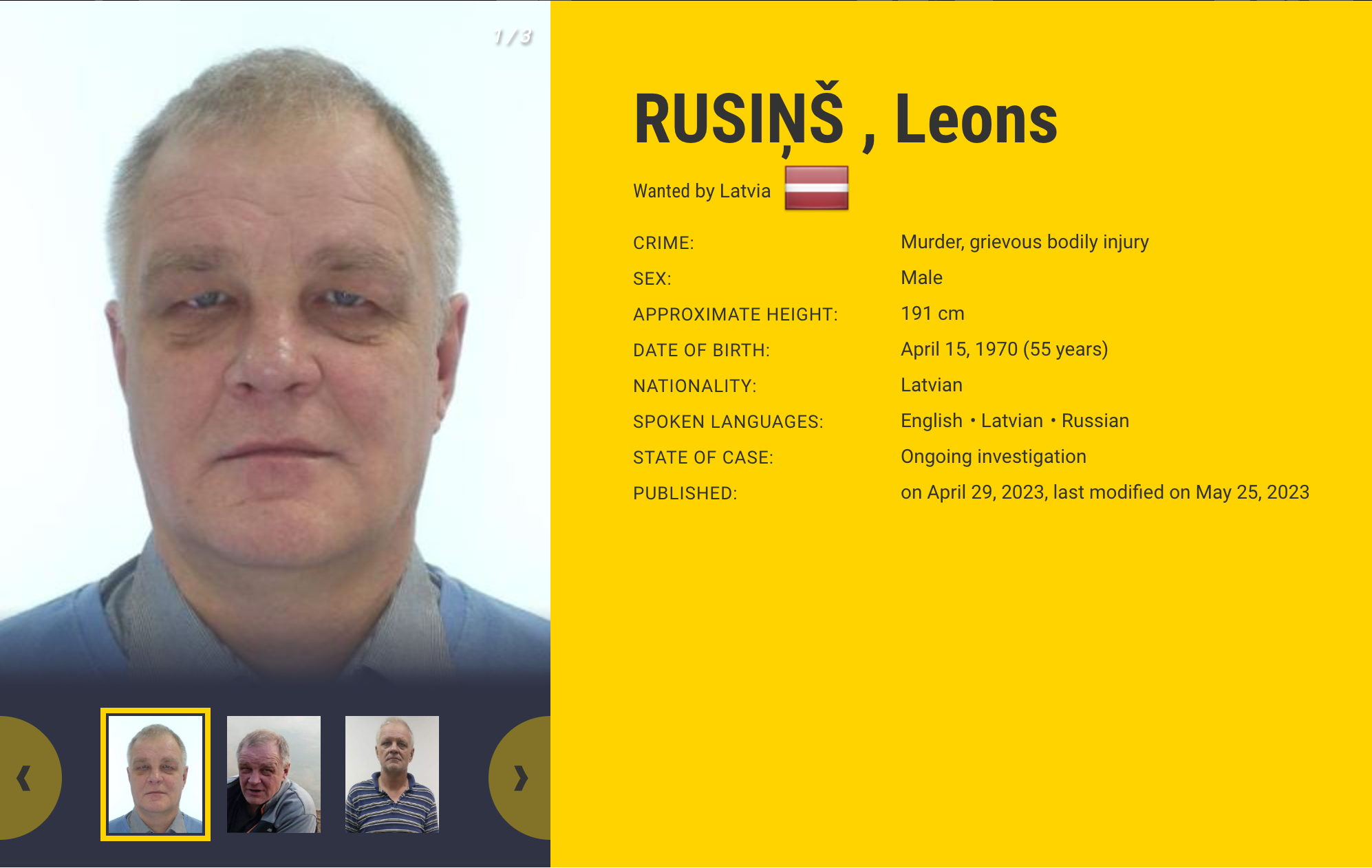
“It’s a very beautiful place for a cemetery,” says attorney Anna Nore. Three years ago, her client Iveta was murdered by her former partner, Leons Rusiņš, in front of Iveta’s mother and child.
That murder became a turning point in the public consciousness. To quote the attorney, “it turned out that we are capable of getting our stuff together”. New tools were created to fight violence: state-funded crisis apartments, tougher penalties for threats and stalking, and a stricter approach to violations of restraining orders. Looking at the timeline of legislative changes aimed at preventing family violence, one of the sharpest advances came in the wake of the 2023 tragedy.
That does not mean nothing was happening before. Quite the opposite: many of the mechanisms that seem self-evident today have emerged only over the past 10 to 15 years. Looking back, one cannot help but ask: how did we live before that?

Several factors drove this change. International reports highlighted the scale of violence in Latvia versus other countries. EU laws required protective measures that had long been standard elsewhere and enforcement of the protective orders issued in another European country. Things slowly started to move.

Police can separate abusers from victims immediately and up to 8 days without a court order. Besides that, the perpetrator has to leave the house, not the victim.
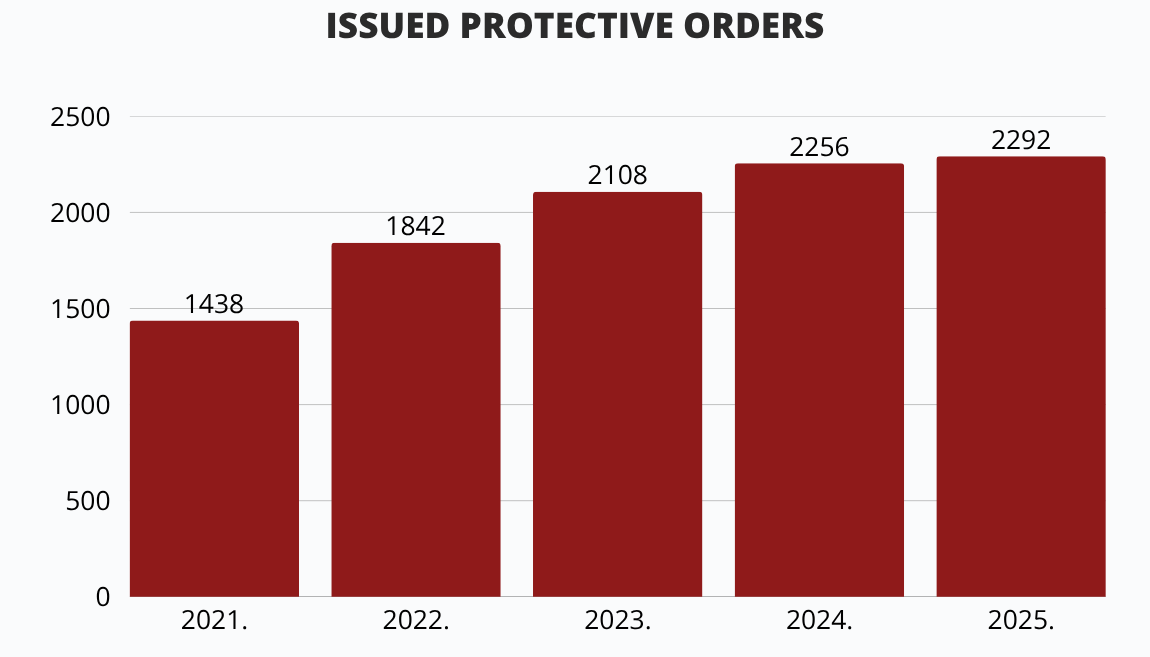
According to the Ministry of Justice, in more than 80 percent of cases the temporary protection is requested by women.

It is available to both victims and perpetrators. Initially it was voluntary for offenders, but since 2021 courts can order perpetrators to attend with the aim of reducing violent behaviour.
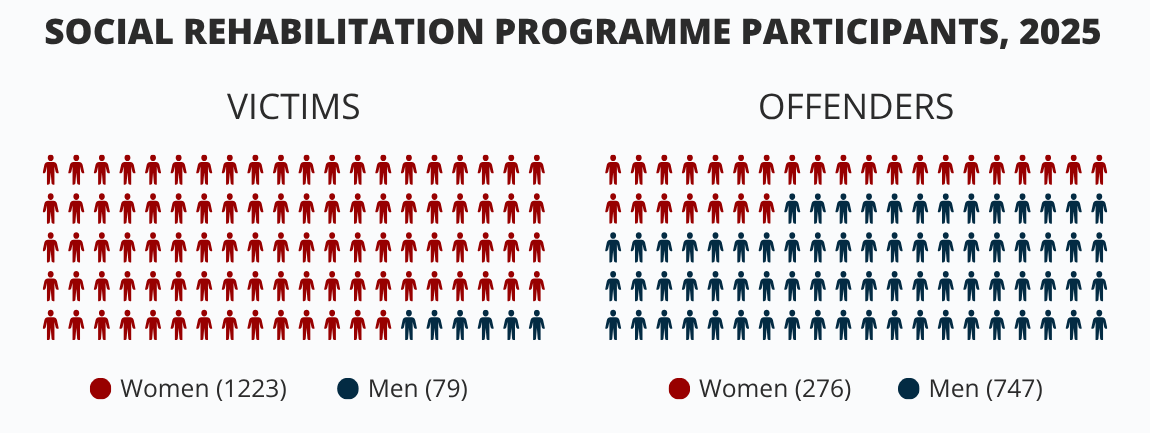
Women make up the majority of victims receiving social rehabilitation, while men dominate programmes for perpetrators, Ministry of Welfare data show.

Legislative changes aimed at protecting victims often initially face misunderstanding and resistance.
That was the case when the Ministry of Justice proposed allowing criminal proceedings for domestic violence to be initiated without a complaint from the victim. Marta Centre, an NGO that works daily with survivors of violence, argued that many women do not file complaints because they live under their partner’s emotional control and are subjected to intimidation and blackmail.
Some politicians, however, maintained that the state should not interfere in relationships between consenting adults. One of the opponents was MP Gunārs Kūtris (then with No sirds Latvijai, now with the Union of Greens and Farmers). He argued that if two people in a family had got into a fight once and neither held a grievance against the other, there was no reason for a third party to intervene.
Kūtris was joined by then-MP Inga Bite (Latvian Association of Regions), as well as Jūlija Stepaņenko, Andrejs Elksniņš and Valērijs Agešins (all then members of Harmony). Despite the opposition, parliament ultimately passed the law.

Stalking is particularly dangerous when committed by a current or former partner. They know the victim’s habits, daily routines, workplace and the places they frequent.
Stalking was criminalised in part to bring Latvia’s legislation in line with the Istanbul Convention, whose ratification took several more years.
The first person convicted under the new provision was a man who had persistently stalked his neighbours. The law also formed the basis for the prison sentence handed to the stalker of Re:Baltica’s journalist Inga Spriņģe. That case reached a successful outcome thanks in no small part to her persistence and the determination of the prosecutor handling it, as police had initially refused to open a criminal investigation.
Last year, the parliament’s committee found that courts were still interpreting stalking too narrowly, requiring proof that the perpetrator intended to intimidate the victim.
Violence Worsens During the Covid-19 Pandemic
Domestic violence increased during the Covid-19 pandemic. The Ministry of Welfare explained that restrictions worsened people’s financial and psychological wellbeing, increasing the risk of violence and substance abuse.
At the time, Re:Baltica uncovered a horrific case in Krāslava. In retaliation for his wife’s decision to leave their abusive marriage, a man strangled their daughter and then committed suicide.
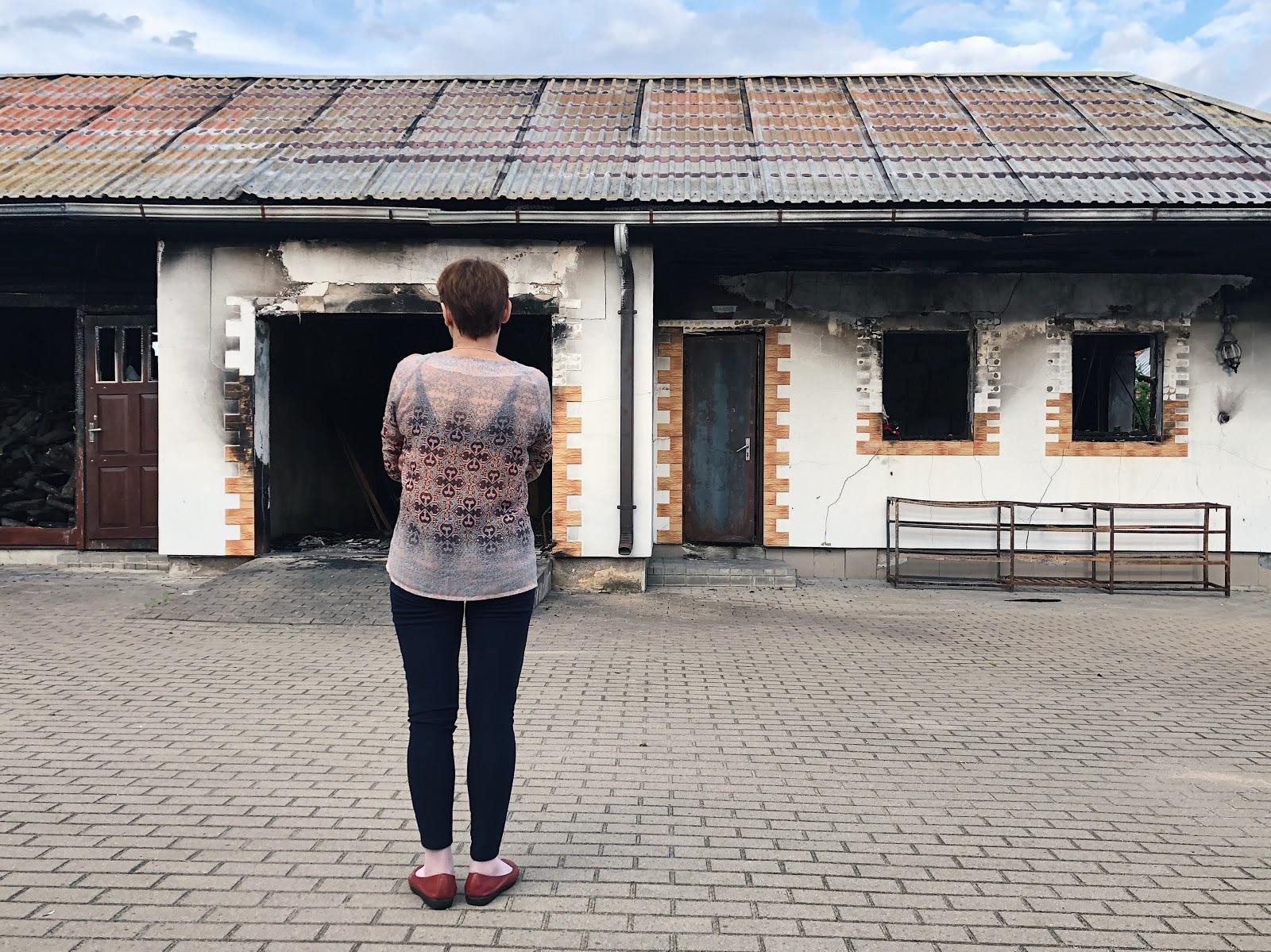
The local police knew that violence had plagued the family for years. The orphan’s court had its suspicions, and neighbours whispered about it. Yet the family was seen as respectable, and no one stepped in.

Before the tragedy, the woman had fled to Riga and applied to the court for a temporary protection. It was denied as law required for it to be filled in the town where she legally resided and the abuse had taken place. It would have required her to return to Krāslava, where her abuser lived, and she was not ready to do that. .
After the tragedy, the law was changed, MP Inese Lībiņa-Egnere (New Unity), urging lawmakers to amend the legislation, cited Re:Baltica’s reporting on the case. The amendments moved from committee to a parliamentary vote with unusual speed — in less than a month. No one voted against.

Police claimed they had informed the social services about the violence in the Krāslava family. The social services denied it. It was impossible to determine who was telling the truth because the communication had not been documented.
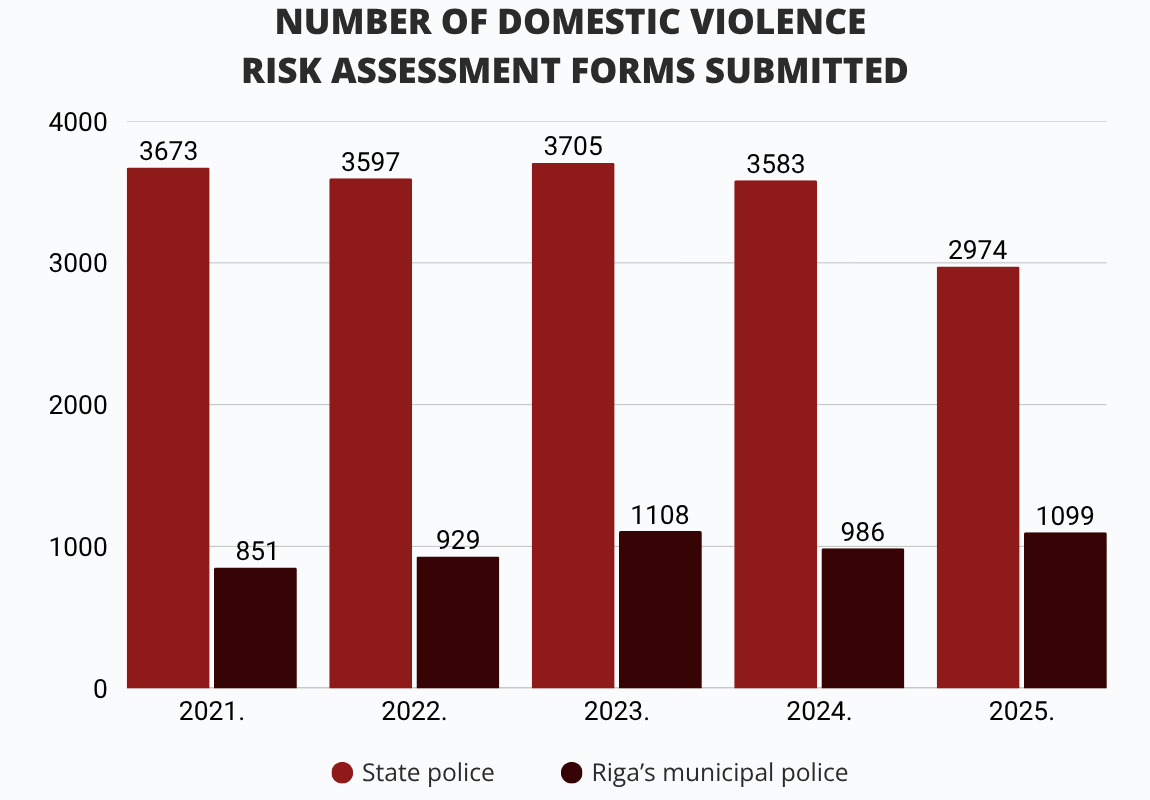
At the time, Re:Baltica once again highlighted the need for a domestic violence risk assessment form. Under such a system, whenever police respond to a domestic violence incident, the officer’s completed assessment is also sent to the social services. This ensures that information does not fall through the cracks and that the family remains under supervision.
The assessment form was not a new idea. It had already been piloted in several police precincts and proven effective, but its nationwide rollout had stalled. Following the murders in Krāslava, the form became a mandatory part of police responses to domestic violence calls.
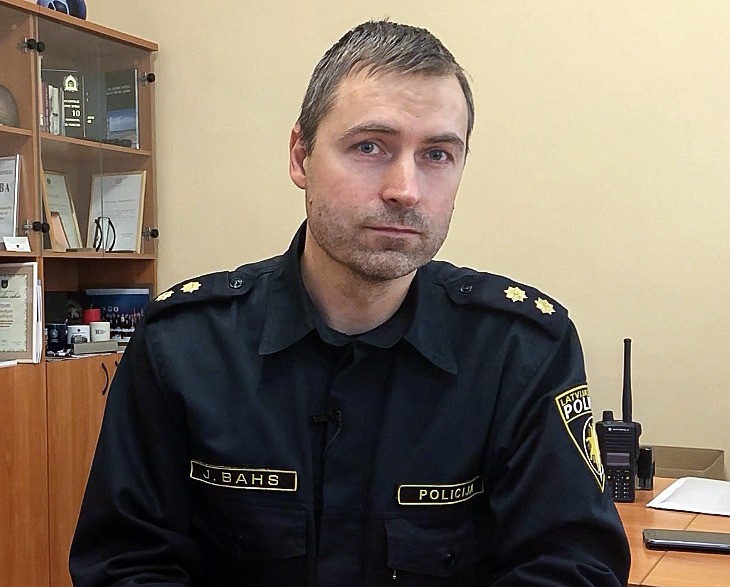
Andis Rinkevics, head of the State Police Prevention Management Bureau, says there was significant resistance to the risk assessment form at first.
“How are we supposed to share sensitive information now?” he recalls as one of the objections. “But thank God there were people, including Janeks, who understood that the goal was more important than legal formalities.”
He is referring to Janeks Bahs, who at the time worked in Tukums.
After the assessment form was piloted in his precinct, Bahs became one of its most visible advocates. He earned considerable public trust. Women sought his advice not only through social media but even when they met him on the street.
Reached by phone now, Bahs says he is pleased that the effort paid off: the assessment form is being used, and it works well.

Rinkevics recalls that this decision, too, initially faced strong resistance within the police force. Previously, an officer could simply say that the victim had not filed a complaint, but now responsibility for the decision rests with law enforcement. “In my view, these powers have proven their worth. There are plenty of cases where we make that decision on behalf of the victim,” Rinkevics says.

The tragedy showed that good laws alone are not enough.
Before murder, she and her lawyer had spent a long time unsuccessfully knocking on the doors of various institutions. The dismissive attitude they encountered was later vividly described by attorney Anna Nore on a TV program where she recalled speaking to a prosecutor, explaining that Iveta was living in desperate fear of her stalker. “I said: Prosecutor, this is a very serious case, please do something. The response was that these lovers always make threats, but they never actually do anything.”
Speaking to Re:Baltica now, Nore again stresses that it was the sluggish response of law enforcement that fuelled Rusiņš’s sense of impunity and superiority. “I think Rusiņš could have been stopped if decisive action had been taken against him from the very beginning,” she says.
In Nore’s view, Iveta’s murder became a lesson.
“This case showed how quickly people can mobilise to change laws and develop plans to combat violence. Even the Istanbul Convention’s ratification suddenly moved forward. We all somehow pulled ourselves together at once.”
Police officer Andis Rinkevics shares a similar view.
“Unfortunately, it’s human nature that we seem to need something extraordinarily tragic before we allow ourselves to do what we previously considered legally impossible.”
The changes went beyond legislation. Courts are now reportedly far more likely to grant police requests to place violent offenders in pre-trial detention.

In response to the tragedy, Parliament swiftly and significantly increased penalties for making death threats, stalking, and violating restraining orders. Previously, offenders faced a maximum prison sentence of three months; now they can be sentenced to up to one year. If the victim is a current or former spouse or partner, the maximum penalty rises to three years.
A year later, lawmakers adopted tougher penalties specifically for violence against family members and intimate partners. Such offences can no longer be punished with community service or a fine alone.

Among the measures introduced after Iveta’s murder, Iluta Lāce, head of the NGO Marta Centre, highlights the creation of crisis apartments. They give victims confidence that, after calling the police, they will not be left homeless.
“This service has literally saved women’s lives,” she says. “While the law enforcement system, so to speak, gets itself in order, the victim remains protected.”
The Ministry of Welfare told Re:Baltica that 58 victims have used the crisis apartments so far – all of them women.

The convention was signed in 2016, but then became bogged down in ideological disputes. Opponents of the treaty spread myths repeatedly debunked by Re:Check — for example, that it would force Latvia to accept migrants, legalise same-sex marriage, or introduce lessons on gender transition in schools.
Some critics argued that the convention was incompatible with Latvia’s Constitution. However, in 2021 the Constitutional Court rejected that claim.
Following the murder in Jēkabpils, the issue regained political momentum, and in November 2023 Parliament ratified the convention. The measure passed with the support of 51 MPs: a bare minimum needed for it.

The original proposal was to make sexual harassment a criminal offence.
“Harassment is not a compliment but a serious problem that must be addressed with equal seriousness,” then Justice Minister Inese Lībiņa-Egnere (New Unity) said.
Parliament ultimately opted for administrative rather than criminal liability, citing the principle of proportionality.
The cases have included a man approaching a woman from behind in a supermarket and touching her intimate areas, groping someone’s buttocks, or sending a photograph of his penis to a colleague’s work email address.
The maximum penalty under the law is a €700 fine. So far, only men have been sanctioned under the provision (46 according to the latest statistics).


When presenting the new measure, the Interior Minister predicted that around 400 such devices might be needed each year. So far, they have been used in only five cases.

The law also applies to artificially generated or manipulated images and videos, including so-called deepfakes. Criminal liability also extends to threats to distribute such material.
What Comes Next?
Iluta Lāce, head of the NGO Marta Centre, says the number of victims seeking help continues to grow. “For example, in Riga last year we saw 20% more women turning to us than the year before. In Rēzekne, the increase is about 50% every year.”
This does not necessarily mean that violence is becoming more widespread. Rather, it suggests that fewer victims are afraid to speak out and seek help.
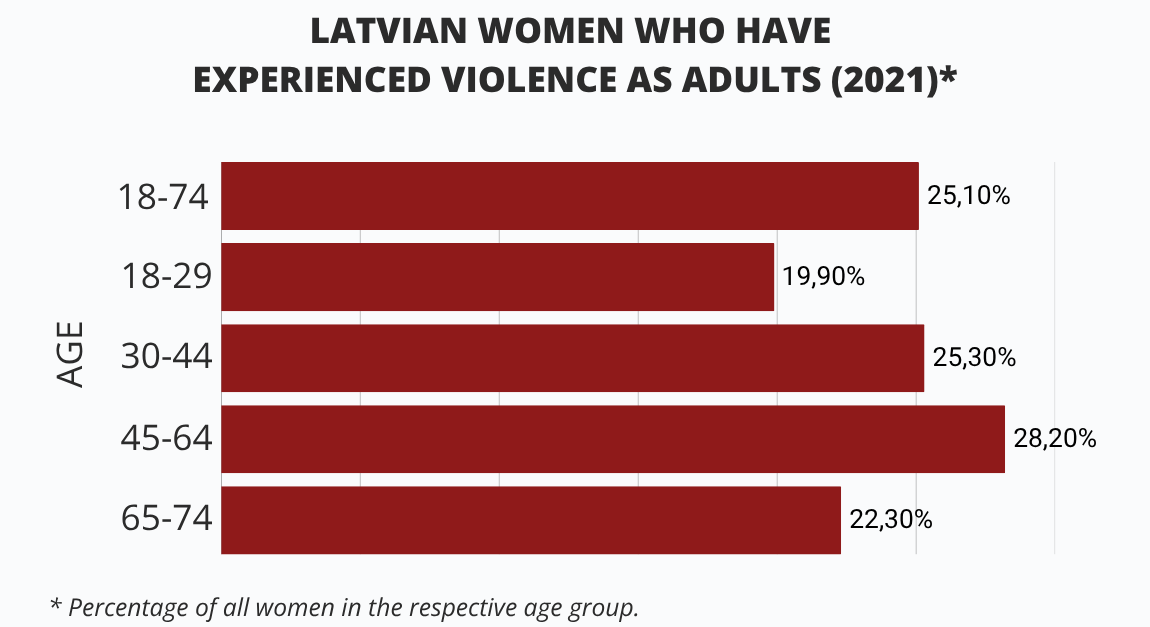
Rinkevics agrees that society is changing.
“Tolerance has changed, as has the understanding that violence is not a private family matter but a public issue — a matter of concern for society as a whole.” That shift, he says, is happening both among the public and within the police force.
As part of his research, Rinkevics once listened to recordings of victims’ calls to the police.
“In many cases, women called to report that their husband had beaten them a day or two earlier. The response from the police was: well, call us when he’s back home, when there are new threats, and then we’ll see what we can do. To put it bluntly, they were brushed off. (…) Yet for that woman, it was important. It may have been the only moment – the only time – she ever found the courage to call.”
Today, he says, police officers have a much better understanding of domestic violence.
But the story is far from over. Last year, four women in Latvia were killed by their current or former partners.
By Inese Braže
Edited by Sanita Jemberga
Illustration by Miko Rode
Graphics and Technical Support: Madara Indāne
Translated with AI

INDEPENDENT JOURNALISM NEEDS INDEPENDENT FINANCING If you like our work, support us! LV38RIKO0001060112712