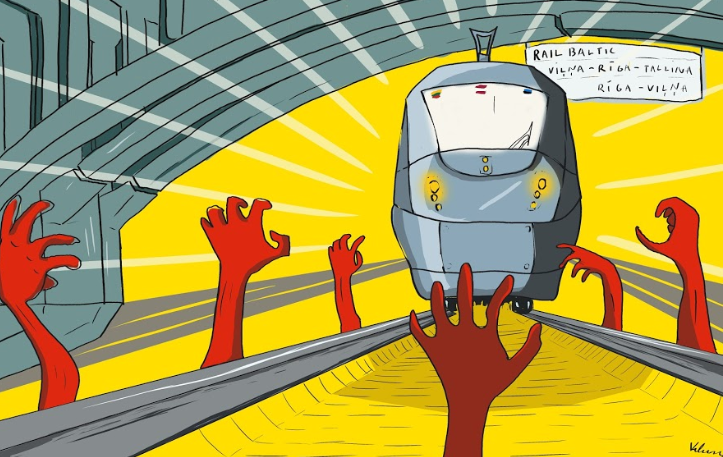
Who Is Afraid Of Rail Baltica?

The opposition to the Baltic high-speed railway line is the loudest and most political in Estonia, while in Latvia and Lithuania it is mostly desperate landowners

The opposition to the Baltic high-speed railway line is the loudest and most political in Estonia, while in Latvia and Lithuania it is mostly desperate landowners

When the Baltic prime ministers meet in Tallinn this Friday, they need to agree how to speed up building of Rail Baltica as deadlines are being missed and costs are rising. Latvia and Estonia are blaming Lithuania for stalling the project, while it digs its heels defending own interests

This article continues our series dedicated to Latvia’s security in the light of Russian aggression in Ukraine, the beginning I which I witnessed in Slaviansk, Donetsk and Kharkiv, while working for US media.

The future of Europe, as per Raivis Zeltits, the secretary-general of the National Alliance (NA), a Latvian government coalition party, looks like this. First, the EU will dissolve into several regional blocs while retaining formal unity. Latvia will find itself in a bloc called Intermarium, which will stretch from Crimean beaches to the Gulf of Riga.

International Fact-Checking Network (IFCN) has listed Re:Baltica’s fact-checking and social media research hub Re:Check among it's verified signatories. The decision has been made by the IFCN board consisting of seven fact-checking experts from different regions of the world. By doing that IFCN has recognized Re:Check's full compliance with IFCN's Code of Principles that promotes a commitment to nonpartisanship and other professional standards.
China's investments in the Baltic countries are so far insignificant, but the Chinese have their eyes on large strategic infrastructure projects, developments that are simultaneously tempting and worrying to the Baltics.

The rise of Chinese influence in the world - and its consequences - has been one of the main topics in international relations in recent years. The US trade war, Europe's attempt to create a common policy against China's attempts to establish special relations with groups within the EU, China's massive investment program for building infrastructure to create new trade routes - it all applies to us, too.

Squeezed between geopolitics and wary of Chinese espionage threats, the Baltic countries look to Brussels for guidance on what to do with Huawei and their 5G networks

The objectives of China's soft power in the Baltic states are to prevent the rise of uncomfortable foreign policy issues like autonomy for Tibet and to disseminate Beijing's worldview through Confucius Institutes.